
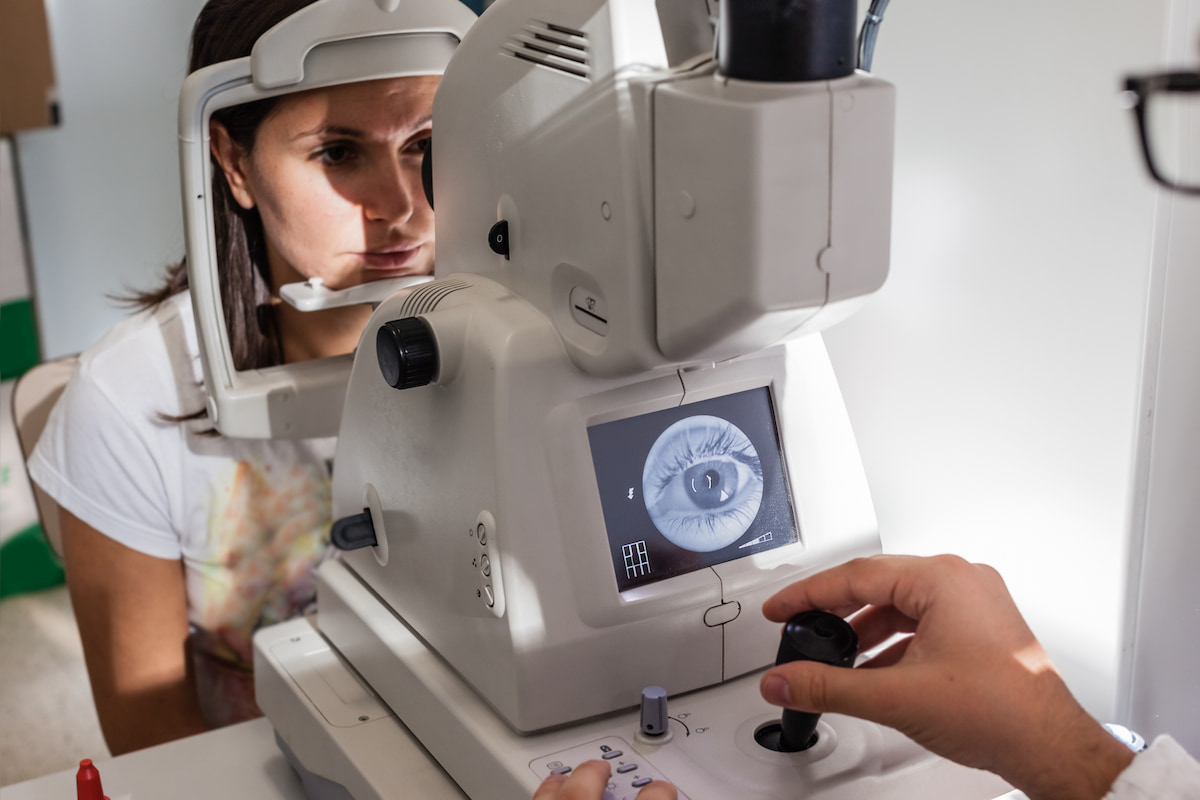
If you have had your eyes dilated before, you may wonder whether an Optomap® retinal image means you can skip dilation at your next appointment. The short answer is: sometimes, but not always.
Both methods help your eye doctor examine the retina — the light-sensitive tissue at the back of the eye. However, they provide information in different ways. During a comprehensive eye exam, your doctor will decide whether an Optomap retinal exam, dilation, or both are appropriate for your eye health needs.
What does an Optomap retinal image show?
Optomap uses scanning laser technology to create a detailed digital image of the retina. The image is quick to capture, does not require anything to touch the eye, and is available right away for you and your doctor to review.
Retinal imaging can help document the health of the back of the eye and create a baseline for future comparison. This can be valuable because some concerns affecting the retina may develop before you notice a change in your vision.
Because Optomap images can be saved in your file, your eye doctor can compare them over time and watch for changes that may need closer evaluation.
Why might dilation still be recommended?
Dilation uses eye drops to temporarily widen the pupil. This allows the doctor to get a more direct and expanded view inside the eye during a comprehensive examination.
An Optomap image offers important information, but it does not automatically replace dilation in every situation. Your doctor may recommend dilation if:
- You have new flashes, floaters, blurred vision, or other vision changes
- You have symptoms that could point to a retinal concern
- Your doctor sees an area that needs a closer look
- You have a personal or family history that increases your risk for certain eye conditions
- Your overall eye health or exam findings call for further evaluation
Dilation can make vision blurry and increase light sensitivity for a few hours, so it is understandable to prefer an exam without it. Still, if dilation is recommended, it is because your doctor believes it will provide information that is important to your care.
Does everyone need dilation?
Not every patient needs dilation at every visit. The right approach depends on your age, eye health, medical history, symptoms, and findings from your exam.
For some routine appointments, retinal imaging may provide the information your doctor needs. In other cases, dilation may be the best next step. These approaches are not necessarily competing choices — they can work together to give your doctor a more complete picture of your eye health.
What should you expect at your appointment?
Your appointment begins with an evaluation of your vision and eye health. If retinal imaging is recommended, you will look into the Optomap device one eye at a time and see a brief flash of light as the image is captured.
Your doctor will review the image with you and explain any findings. If dilation would add helpful information, they will discuss why it is recommended and what to expect afterward.
Get the right view of your eye health
Optomap retinal imaging is a convenient, comfortable way to document and assess the retina. But whether it replaces dilation depends on your individual exam. Schedule an eye exam to discuss retinal imaging and determine the best way to evaluate your eye health.