If your thyroid is out of balance, your eyes can be some of the first places you notice it. Plenty of patients who assumed their symptoms were just stress, allergies, or too much screen time, only to learn their thyroid health was playing a role. Visiting an eye doctor can help connect the dots, especially when eye changes show up gradually and start interfering with comfort, appearance, or vision.
Your thyroid helps regulate metabolism and many body systems. When it misfires (whether through hyperthyroidism, hypothyroidism, or autoimmune conditions like Graves’ disease), your eyes can react in very real, very physical ways.
Can thyroid issues show up in the eyes?
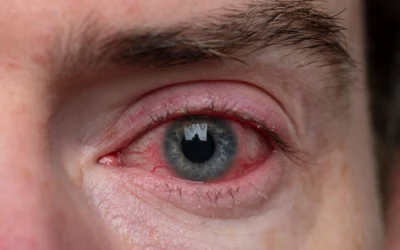
Thyroid-related eye problems are often linked to inflammation and immune activity around the eye socket. Some people experience mild irritation. Others notice more dramatic changes that affect daily life, confidence, and even safety while driving.
Common symptoms can include:
- Dryness, burning, or gritty sensation
- Redness or swelling of the eyelids
- Watery eyes that still feel dry (yes, both can happen)
- Sensitivity to light
- Blurry vision that comes and goes
- Pressure or aching around the eyes
- Changes in eyelid position (eyelids may look pulled back)
- Double vision
- A “staring” look or visible bulging of one or both eyes
Of all these symptoms, bulging can be especially unsettling. It can change how your face looks in photos, make your eyes feel exposed, and increase dryness because the eyelids may not fully protect the surface of the eye.
Why you might feel tired
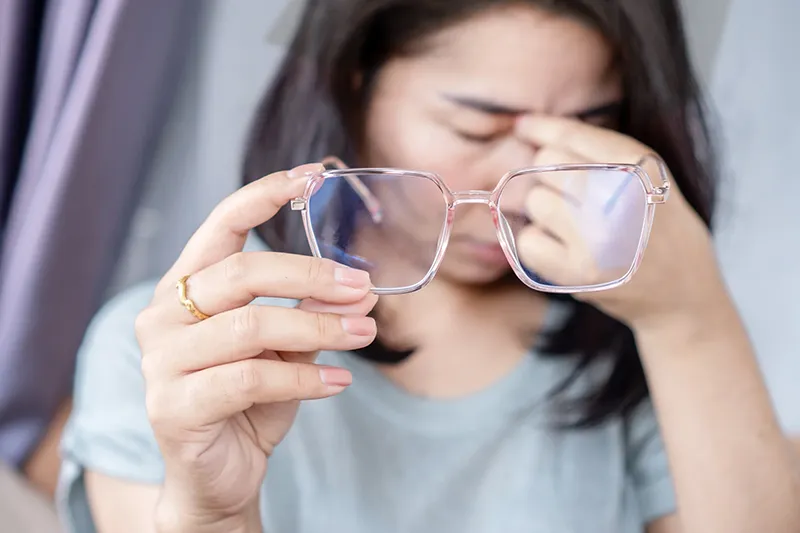
A lot of people describe a frustrating mix: they’re tired, yet their eyes feel wide, strained, or irritated. Thyroid imbalance can disrupt sleep, increase anxiety, and contribute to muscle weakness. At the same time, eye surface dryness and inflammation can create that “I can’t relax my eyes” sensation.
If any of this feels familiar, it’s worth paying attention to patterns, such as:
- Worse symptoms in the morning or late evening
- Eye discomfort that spikes during screen use
- Increased dryness in winter, wind, or air conditioning
- More noticeable changes during thyroid medication adjustments
The goal isn’t to self-diagnose; it’s to recognize that persistent eye symptoms deserve a closer look.
How a comprehensive eye exam can help
A comprehensive eye exam does more than check your prescription. It helps us evaluate the health of the eye surface, eyelids, eye movements, and internal structures, all areas that can be affected by thyroid conditions.
Depending on your symptoms, your visit may include:
- Checking vision clarity and refraction changes
- Evaluating eyelid position and blinking patterns
- Assessing eye dryness and tear quality
- Measuring eye pressure
- Examining the optic nerve and retina
- Testing eye teaming and movement (important if you notice double vision)
If thyroid eye disease is suspected, we can also coordinate care with your primary care provider or endocrinologist. Eye symptoms and thyroid labs don’t always move in sync, so having both teams informed can reduce delays and frustration.
A clearer path forward for comfort and confidence
Eye changes tied to thyroid conditions can feel personal because they affect how you look, how you function, and how you feel day to day. If your eyes are dry, strained, gritty, or changing in appearance, a focused evaluation can help pinpoint what’s happening and map out the next steps.
Schedule an appointment at Newport Eye Care in Newport to get your symptoms assessed and create a plan that supports both your vision and your comfort.